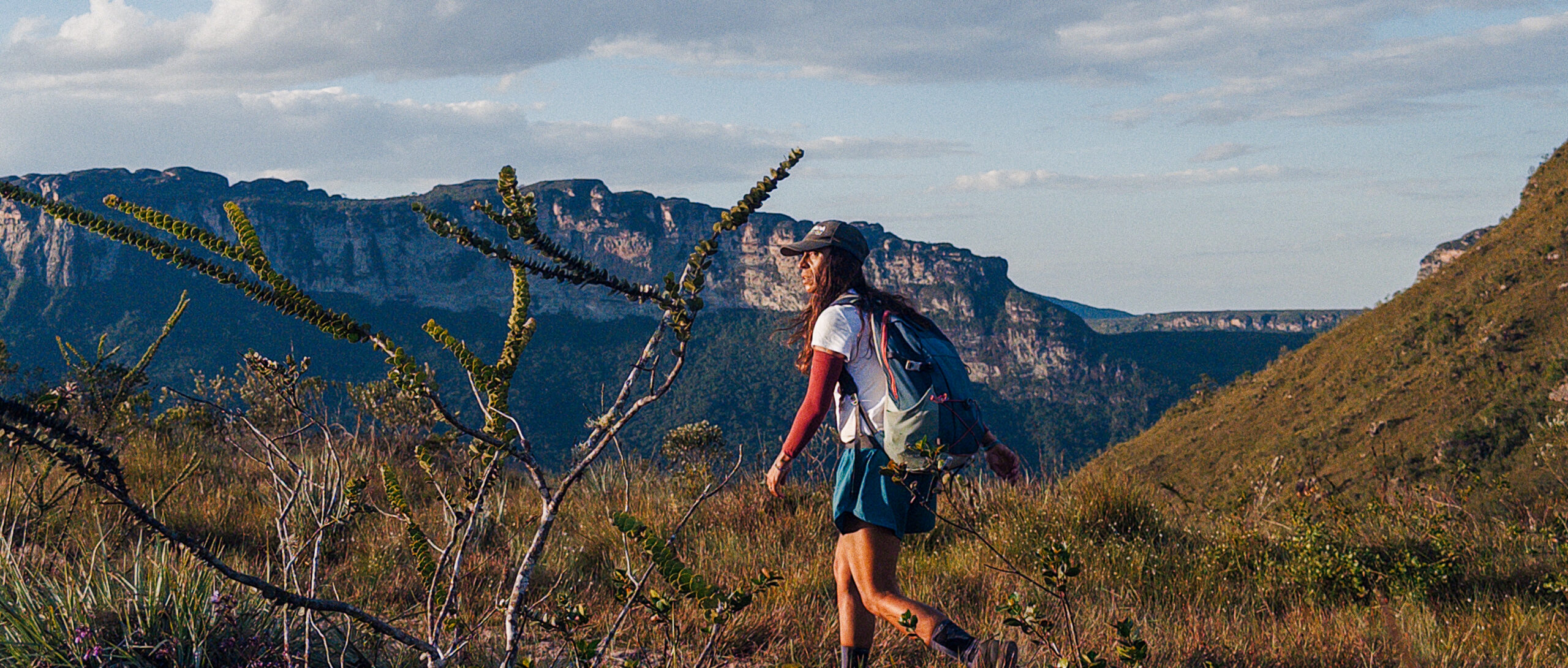
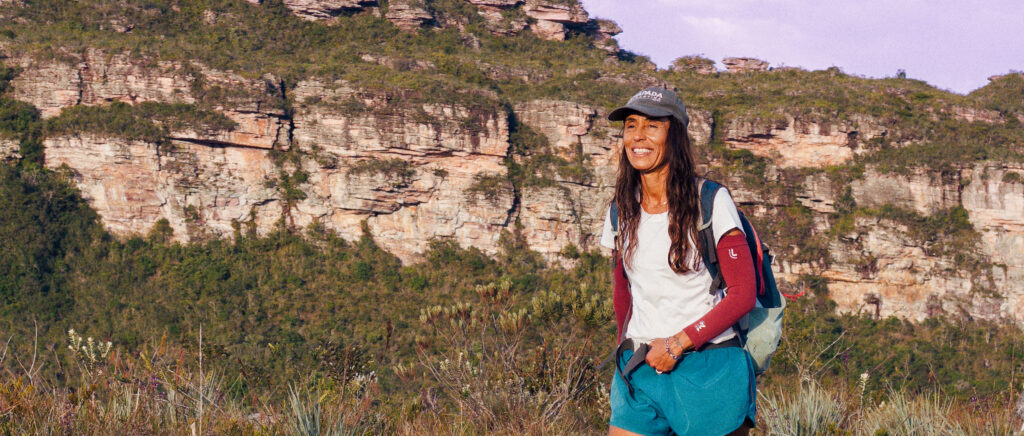
Between the mountains and the intimacy of its homes, Vale do Pati transforms our relationship with time. One of Brazil’s most remarkable landscapes, it brings travellers closer to the people who have known and walked these paths for generations.
There are places whose beauty asserts itself at once. In Vale do Pati, stone walls, open gerais, rivers and paths between the mountains form a landscape of almost unimaginable proportions. Yet the experience deepens with the passing days. What begins as admiration before nature gradually becomes a human relationship.
After hours of walking, one arrives at a home. The fire is lit, food begins to fill the table, and someone asks how the path was. Conversations carry on into the night, revealing a life shaped within the valley, among families, crops, animals, mountains and the long distances travelled on foot.
At that moment, Pati ceases to be only a landscape and becomes an encounter. And it is this encounter that remains.
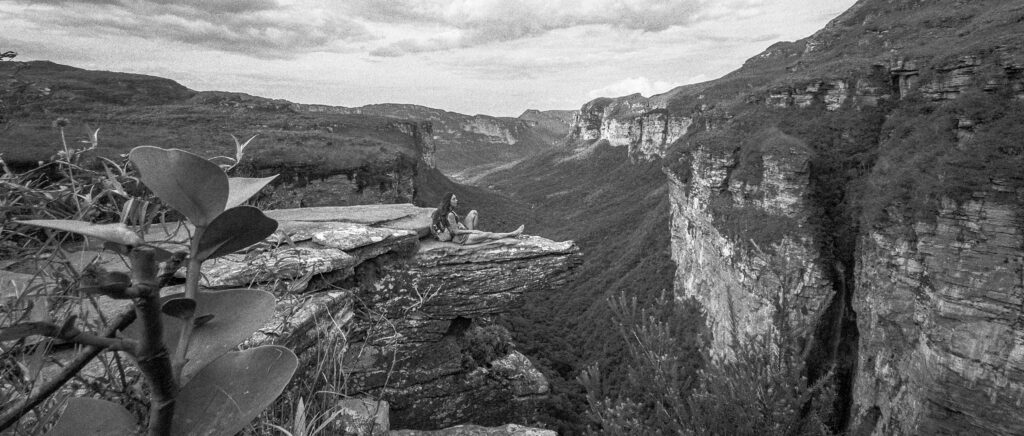
Many Crossings, Different Ways of Feeling the Valley
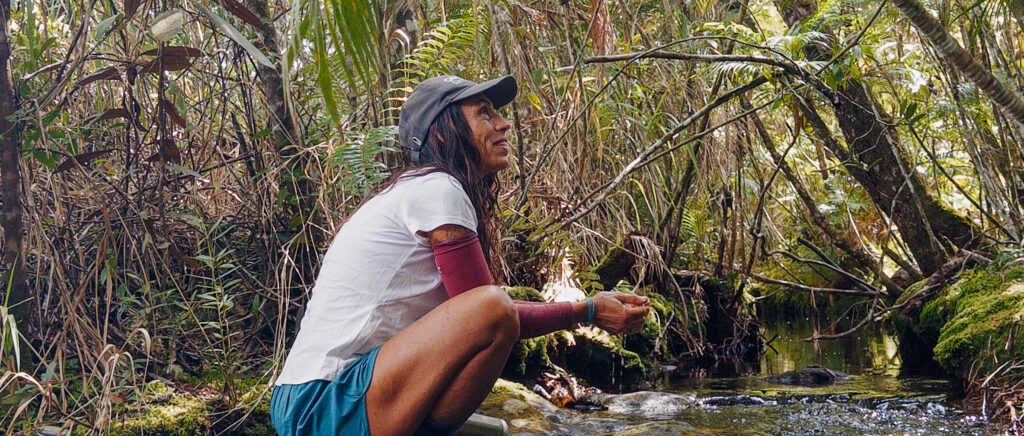
There is no single crossing of Vale do Pati. There are shorter journeys and multi-day routes; paths that traverse the gerais, descend through forests, follow rivers or reach the houses from different sides of the mountains.
The number of days matters, but it does not, on its own, define the depth of the experience. Pati also reveals itself in the rhythm of the walk, in the time given to a conversation, in the changing clouds and in the arrival at a home after hours among the mountains.
Here, stepping beyond one’s comfort zone takes on a particular meaning. It is the acceptance of a chosen effort, the trust placed in the path, the awareness of one’s own body and the permission to let another measure of time shape the day. Care remains present throughout the experience: in the right choice of route, in the attentive reading of the person who guides, in the safe rhythm of the walk, in the warm meal and in the calm of a home prepared to receive. The challenge remains, but it gains form, confidence and meaning.
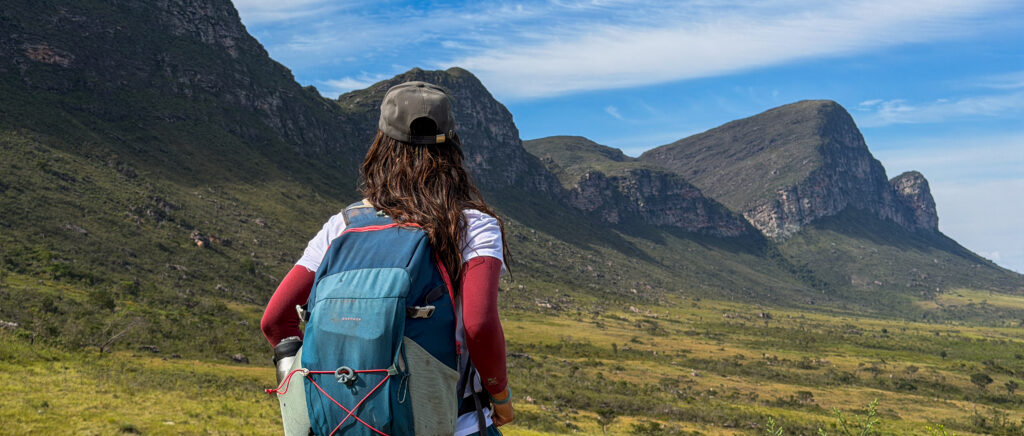
A Life Shaped by Paths
In Vale do Pati, walking is part of life.
While one group begins a crossing, someone tends the crops, organises the kitchen, prepares the animals or takes the path to visit another family. Some residents cross the valley to buy supplies; young people walk long distances to study; relatives walk for hours to share a meal or spend a few days together.
Vale do Capão, Andaraí, Mucugê and Lençóis form an emotional geography. These are places where children, siblings, grandparents, friends and former neighbours live. The mountains separate the homes; the paths continue to bring people together.
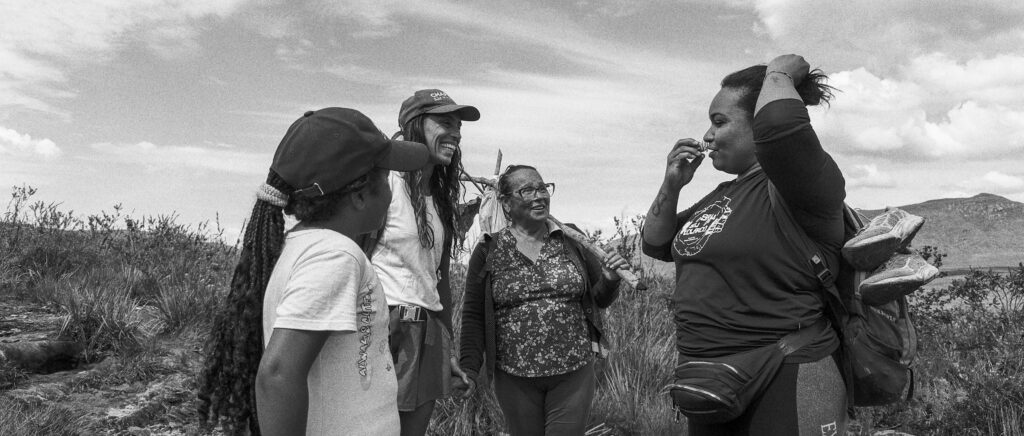
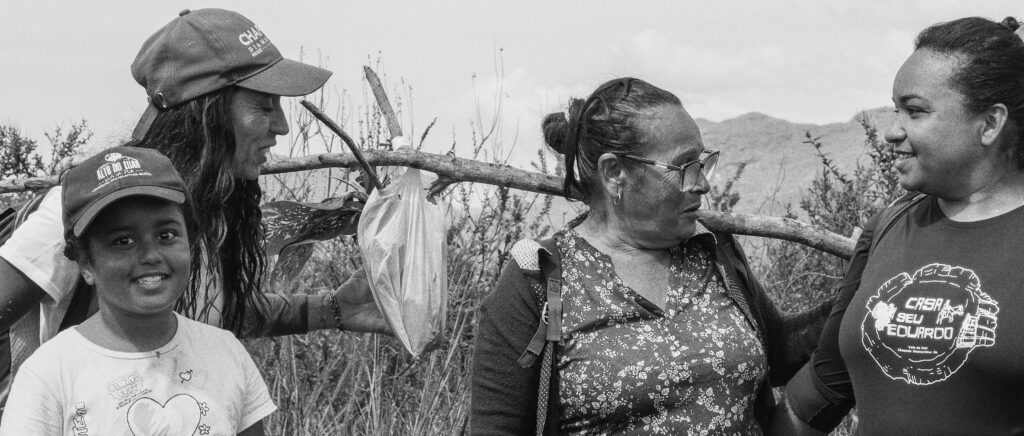
On one of these walks, we met a family making their way through the valley. Their smiles were light; their pace, unhurried. There was, in the way they crossed the landscape, a deep sense of belonging, recognisable in their familiarity with every bend, every ascent and every distance. For them, the valley held an intimate geography of homes, relatives and memories.
It is this life in motion that gives Pati its meaning.
Rainhas da Serra: Women Opening Paths in Chapada Diamantina
To travel through Chapada Diamantina with the women of the Associação de Guias e Condutoras da Chapada Diamantina is to discover the region through those who deeply understand its paths, its landscapes and the communities that are part of this story.
The association brings together 35 women guides and trail leaders from Lençóis, Andaraí, Mucugê, Palmeiras and Vale do Capão. Their work extends across the whole of Chapada Diamantina, covering different trails and crossings, including the paths of Vale do Pati. Guiding is available in Portuguese, English, Spanish and French.
At the head of the association, Juliane Santos da Silva gives voice to the way Rainhas da Serra conducts each experience:
“Our intention is to offer safe experiences for women, for couples, for families, for everyone.”
Technical knowledge, an attentive reading of the landscape, sensitivity to different rhythms and the relationships built along the paths define the work of these women. For travellers from other countries, walking with Rainhas da Serra means sharing Chapada Diamantina with those who know it deeply, and discovering a women’s network capable of inspiring far beyond the crossing.
Discover Chapada Diamantina with the Rainhas da Serra Association
The Associação Rainhas da Serra brings together women guides and trail leaders who work across different trails, crossings and experiences throughout Chapada Diamantina.
Associação Rainhas da Serra
Instagram: @associacaorainhasdaserra
Juliane Santos da Silva — President of the Rainhas da Serra Association
WhatsApp: +55 (75) 99868-4847
Instagram: @juliguiachapadadiamantina
Cris Pascoli — guide and member of the Rainhas da Serra Association
WhatsApp: +55 (75) 99966-6665
Instagram: @naturezadivina.diamantina
Where to Stay in Vale do Capão Before Setting Off for Vale do Pati
For those beginning the Vale do Pati crossing from the Vale do Capão region, spending the night in the village can make the departure part of the experience itself. Pati allows for different access points and countless route combinations. It is possible to enter through Bomba, at the far end of Vale do Capão; to drive to Guiné, about an hour and a half away, beginning the walk at a higher altitude and making the passage through Gerais do Rio Preto gentler; or to start the crossing from Andaraí, shaping the route from another side of Serra do Sincorá.
For those beginning the Vale do Pati crossing from the Vale do Capão region, spending the night in the village can make the departure part of the experience itself. Pati allows for different access points and countless route combinations. It is possible to enter through Bomba, at the far end of Vale do Capão; to drive to Guiné, about an hour and a half away, beginning the walk at a higher altitude and making the passage through Gerais do Rio Preto gentler; or to start the crossing from Andaraí, shaping the route from another side of Serra do Sincorá.
For those setting off through Capão or Guiné, staying in Vale do Capão before the walk helps both body and imagination enter the rhythm of the crossing. The departure is no longer merely a logistical matter; it becomes preparation, silence and anticipation.
In our experience, we spent the night at Pousada do Capão, a special place for this pause before the path. In the evening, we drank wine around the fire and stayed there, between conversation and imagination, dreaming of what the following day would bring. There was that good kind of nervousness, the feeling that belongs to adventures that have not yet begun, but already occupy the whole body.
As we left before breakfast was served and had forgotten to request in advance the wonderful trail snack offered by the pousada, we made our way to Bella Vista Padaria. There, we had a delicious coffee and ordered snacks to take with us on the walk.
It was one of those small detours that become part of the journey’s memory: starting the day early, having a good coffee in the village and setting off for the trail with the journey already beginning to take shape.
On the return from Pati, there are rituals that also become part of the crossing. For us, Pizzaria Capão Grande is indispensable — a wonderful family-run pizzeria led by Thomas, Linalda and their children, Talos and Ayla.
The wood-fired oven, the radically simple choice — just one savoury flavour and one sweet flavour — and the honey with chilli, almost impossible to describe, turn the arrival back in Capão into a quiet celebration. After days among mountains, homes, rivers and paths, a shared pizza, a hot shower and a good night’s sleep help the experience settle into the body. And, almost without noticing, we already begin to think about the next adventure.
Pousada do Capão
Site: https://www.pousadadocapao.com.br/
WhatsApp: +55 (75) 99187-0175
Bella Vista Padaria
Instagram: https://www.instagram.com/bellavistapadariacapao
WhatsApp: +55 (75) 98700-0775
Pizzaria Capão Grande
Instagram: https://www.instagram.com/pizzadocapaooriginal
WhatsApp: +55 (75) 3344-1138
What is one of the best hikes in Brazil?
Is Vale do Pati one of the best multi-day hikes in Brazil?
For travellers seeking a genuine multi-day walk rather than a conventional sightseeing tour, Vale do Pati is one of Brazil’s most rewarding hiking experiences.
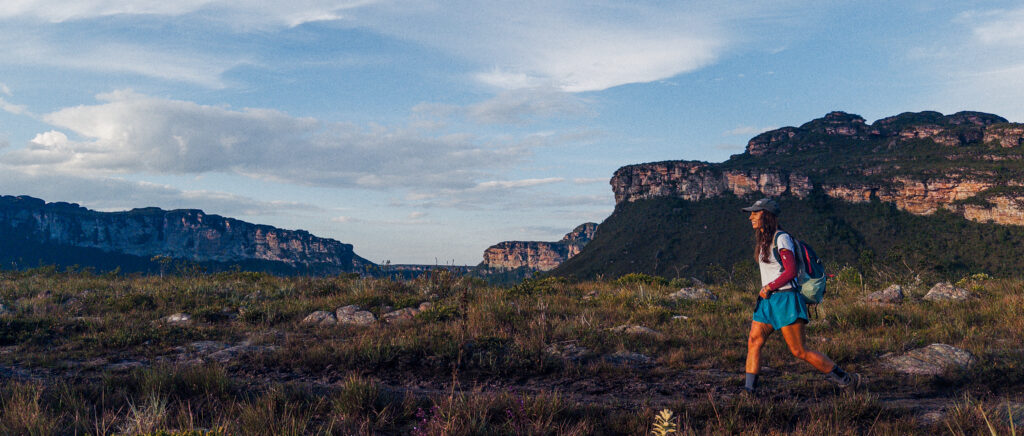
The valley lies within Chapada Diamantina National Park, in the mountains of Bahia. It is reached on foot from trailheads near Guiné, Vale do Capão, Andaraí or, on longer itineraries, Mucugê. Once inside, roads disappear and the journey continues through high plateaux, river valleys, waterfalls and the homes of local families.
What makes Vale do Pati different from other wilderness hikes?
Vale do Pati combines a protected mountain landscape with a living human presence. The trek crosses Chapada Diamantina National Park, yet walkers do not spend the journey entirely removed from local life.
At the end of each day, they are welcomed into family homes inside the valley. Paths used by hikers also connect residents, relatives and surrounding communities. This relationship between wilderness, hospitality and everyday life distinguishes Vale do Pati from a trek built solely around physical achievement or scenic viewpoints.
How do you reach Vale do Pati from Lençóis?
Lençóis is a practical base for arranging a local guide, storing luggage and organising a road transfer to the chosen trailhead. The trek itself does not normally begin in the town.
Common starting points include Guiné, the Vale do Capão area and Andaraí. Longer crossings may also connect with Mucugê. From the trailhead onwards, the journey continues on foot. The best entry and exit points should be chosen together, as they determine the difficulty, scenery, transfer time and number of days spent inside the valley.
.
Should you spend three, five or seven days in Vale do Pati?
A three-day itinerary suits travellers with limited time and offers a meaningful introduction, although it covers only part of the valley.
Five days allow for a more complete crossing, greater variety and the possibility of staying with different families. Seven days are better for those who value depth over speed, want more flexibility and prefer to absorb the landscape rather than move through it as quickly as possible. The longest itinerary is not automatically the best. Daily distances, route profile and recovery time should be matched to the group.
How fit do you need to be for the Vale do Pati trek?
You do not need to be an elite athlete, but you should be comfortable walking for several consecutive days on uneven natural terrain.
Depending on the route, the trek may include long stages, steep ascents, demanding descents, river crossings and sustained heat. Carrying an unnecessarily heavy backpack makes the experience considerably harder.
Preparation should include regular walking, hills, leg strength and time on your feet. A reputable guide will assess the group and select a route that is challenging without turning the journey into an endurance test.
Why is a local guide so important in Vale do Pati?
Navigation is only one part of the guide’s role. A knowledgeable local guide understands changing trail conditions, river levels, weather, family accommodation, transport logistics and the different rhythms within a group.
They can also explain how the landscape is lived, not merely crossed. This is particularly valuable in a valley where paths connect residents and communities as well as hikers.
For international travellers, language ability, emergency procedures, group size, route flexibility and what is included in the price should all be confirmed before booking.
What are the finest landscapes and photography opportunities in Vale do Pati?
The valley offers broad highland views, enclosed river corridors, dramatic rock walls, waterfalls and elevated viewpoints such as the Mirante do Pati and Cachoeirão.
Morro do Castelo introduces a different scale, combining a demanding climb with rock formations and extensive views. The Gerais do Rio Preto provide open landscapes where weather and light can transform the scene within minutes.
Photographers should plan for changing conditions rather than a fixed checklist. The most memorable images often emerge along the path, inside family homes or during the transitions between major viewpoints.
What are the homestays in Vale do Pati really like?
Accommodation is provided in family homes inside the valley rather than in conventional wilderness lodges.
Comfort is simple and varies between houses. Travellers may encounter shared rooms, shared bathrooms, limited electricity and few of the services associated with a hotel. Exact arrangements should be checked in advance, especially for couples, solo travellers and anyone with mobility or privacy requirements.
What the homes offer is rarer than standardised luxury: a safe place to rest, generous hospitality, home-cooked meals and direct contact with the people whose lives are part of the landscape.
Can dietary requirements be accommodated on the Vale do Pati trek?
Meals are prepared in family homes and generally include breakfast, food for the trail and dinner. They are generous, regional and often cooked in wood-fired kitchens.
Vegetarian meals and some dietary adjustments may be possible, but they must be discussed before the route is confirmed. Travellers with severe allergies, coeliac disease or complex medical diets should provide precise information and ask how cross-contamination will be managed.
Remote hospitality depends on planning. It is unreasonable to arrive inside the valley with an undeclared restriction and expect specialised ingredients to be immediately available.
When is the best time to hike Vale do Pati, and what should you pack?
Vale do Pati can be visited throughout the year, but there is no single season that guarantees every advantage.
Drier months usually provide more stable conditions for long walking days, while wetter periods can bring greener vegetation and stronger waterfalls, together with mud, slippery rock and less predictable rivers.
Pack worn-in hiking footwear, sun protection, a rain layer, a warm layer, head torch, reusable water capacity, personal medication and a compact change of clothes. Mobile coverage is limited or absent across much of the valley, so offline information and agreed logistics are essential.
Why is the Vale do Pati trek more than a hiking achievement?
For many travellers, the Vale do Pati trek begins as a physical journey through one of Brazil’s most dramatic mountain landscapes. Over the following days, achievement gradually gives way to attention.
Walking becomes a way of understanding distance. Family homes become places of exchange. Meals, conversations and paths used by local residents reveal a Brazil rarely encountered through conventional itineraries.
What endures is not simply the scale of Chapada Diamantina National Park, but the feeling of having entered a living landscape rather than passed through an empty wilderness. Vale do Pati remains with travellers because it changes not only what they have seen, but also how they have travelled.